Notes on some books I've read this summer
Quick notes on four books I carried around this summer: Hamsun's Victoria, Steinbeck's Of Mice and Men, Greer's Less, and Kristóf's short stories.
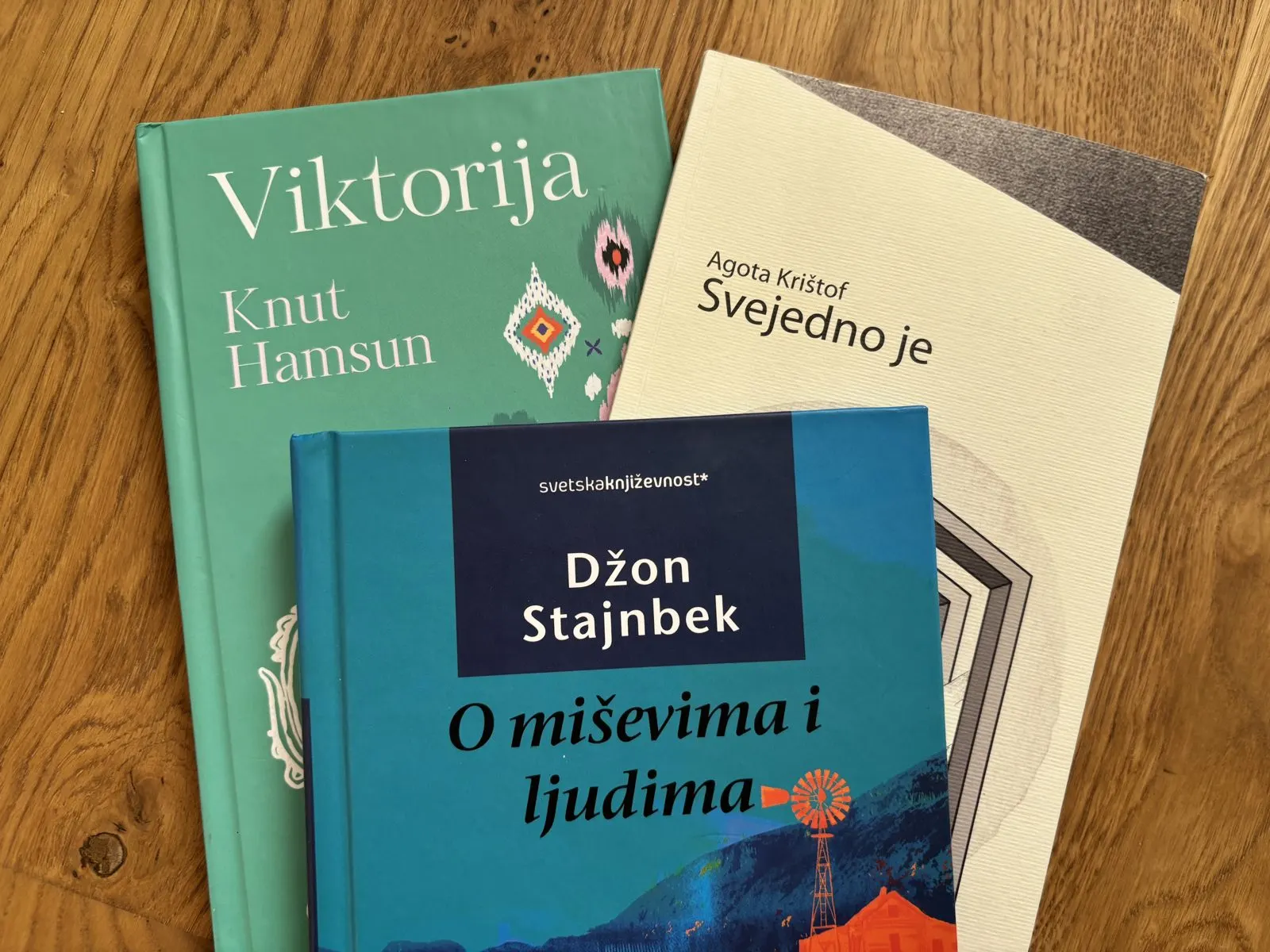
As I was reorganising my home office, I realised there were quite a few books I had some opinions about, so I decided to share some quick notes here. I tend to switch between topics and styles, and I read multiple books at once, redirecting my attention as I see fit. If this selection seems unusual, well… it’s just how we do it here. So, here’s a selection of books I carried around this summer!
Victoria, Knut Hamsun
Read in Serbian: Viktorija, published by Edicija
Published in 1898, this novel is the third Hamsun book I’ve read. After reading Hunger (1890) and Growth of the Soil (1917), which are fundamentally different in both style and the themes they explore, Victoria felt just… okay. It is a short piece that explores a pretty familiar trope: a poor boy and a rich girl can’t make their love work due to society’s expectations.
I did like the descriptions of nature scattered throughout the book. I also liked some fragments about other characters and their stories, which he uses in one of the last chapters to explore different forms of love. Paired with Johannes’s dream fragment in chapter V, I dare say I could recognise the Hamsun of Hunger inside Victoria. I’ll write about this book in more detail once I complete my Reading Hamsun project (yes, I plan to read every single one of his books!). For now, I don’t think I would recommend it — unless you have a relaxed day on your hands and really want to see what Hamsun looks like when he tries to write about love(s).
Of Mice and Men, John Steinbeck
Read in Serbian: O miševima i ljudima, Džon Stajnbek, published by Kosmos
I know I’m a bit late to the game, but I’m convinced I picked this book up at just the right time. Had I read it when I was younger and less equipped with the ability to analyse prose from the POV of an aspiring writer, I probably wouldn’t have gotten it.
Now, I find it to be a very important piece of American and world literature and at the same time a great example of literary craft. Of Mice and Men is a short novel that follows George and Lennie during the Great Depression as they move through California in search of work. They aren’t looking for work only to feed themselves — they have big plans of becoming independent, of living their own American dream, which is what keeps them focused and motivated as the story progresses.
George and Lennie are different in many ways: their own little union seems unusual compared to the other workers, who tend to move around on their own, not forming ties. They are different within their own relationship, which, even though it might seem disproportionate in power at times, is in fact a symbiosis: a mutually beneficial relationship. Now, I don’t want to explain the whole plot here; the reason I think this book is important is that it gives us a glimpse into the lives and struggles of many Americans during that time. We see how mental and physical disabilities or skin colour affect the way society treats people and, even though that is not a new phenomenon, the novel allows us to observe how hierarchical structures form even within a group of people you would consider society’s rejects — even if you are rejected, you will find someone else to reject.
I do have to say once again how surprised I was with Steinbeck’s writing: the smart use of repetition and circular structure, foreshadowing, the way in which he introduces the characters and, generally, the trust he places in the reader. I 100% recommend Of Mice and Men and find it an essential read. The next Steinbeck novel I plan to read is The Grapes of Wrath; however, it seems impossible to find a Serbian translation nowadays.
Less, Andrew Sean Greer [SPOILER ALERT]
I started reading this book because I was interested in exploring self-doubt and impostor syndrome among creative professionals. This one stood out because of its ratings and awards, but it also intrigued me because it explored topics I was unfamiliar with and not really used to reading about, such as same-sex relationships and the fear of ageing.
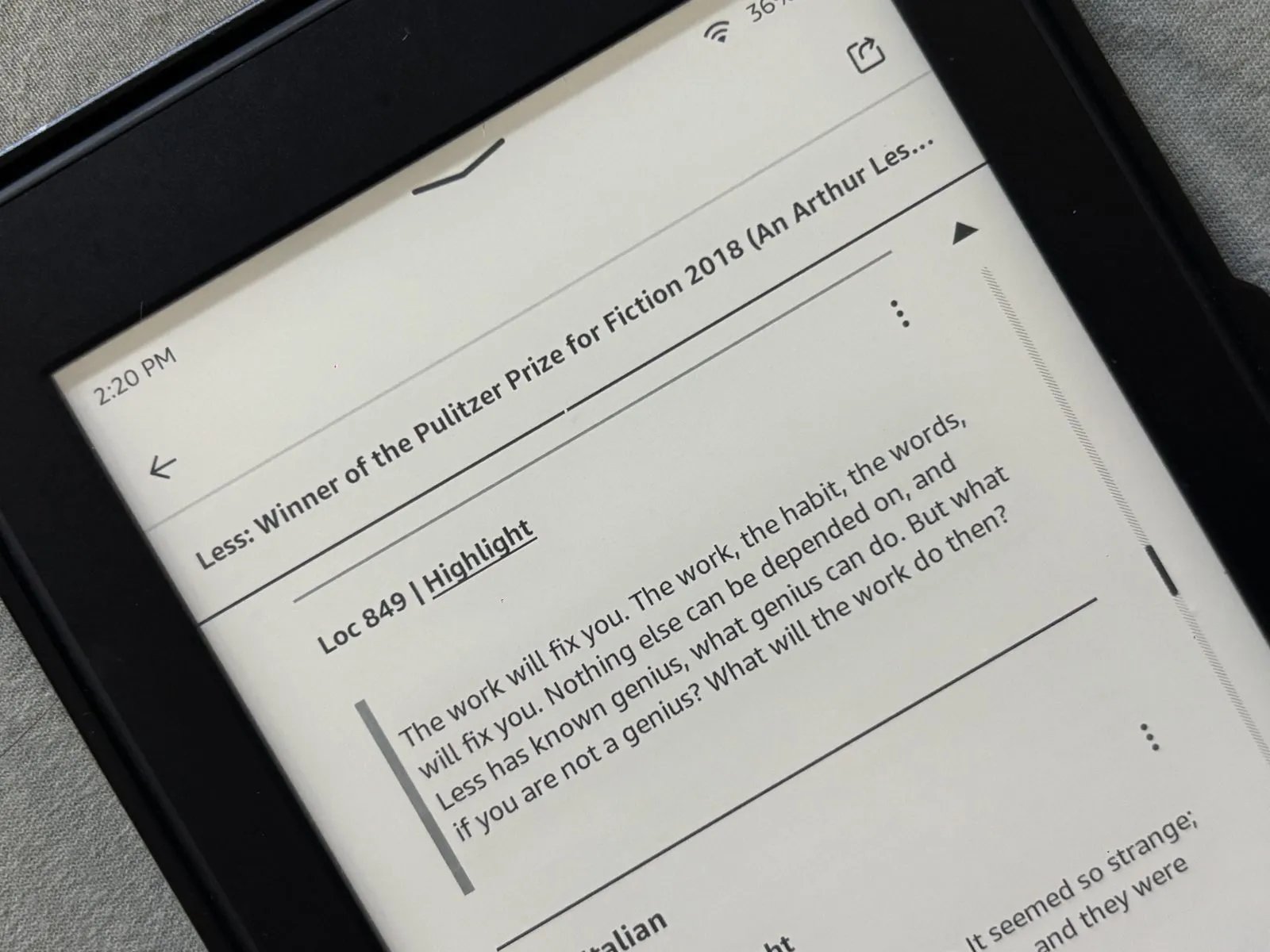
I enjoyed the protagonist’s thoughts and views on creative processes, writing, and comparisons with other artists, including one’s own romantic partner. I liked that the narration seemed Wes Anderson-ish at some points. It was an enjoyable and easy read… until it wasn’t. Around the Marrakech chapter, the book started relying on familiar tropes and became predictable (who would have guessed that receiving a bunch of calls from an unknown number might mean someone important is trying to reach you?).
By the end, it felt like the book was losing its thread and trying to compensate for its cheap resolutions by forcing itself to become more philosophical than it really was. The woman Less meets in Marrakech felt like an empty character, conveniently also fifty and travelling alone, while Freddy’s return seemed equally convenient and predictable. And then there’s the symbolism: a man who feels trapped in life becomes literally trapped in a room? By that point, readers already understand Less well enough without needing such a literal metaphor.
I would recommend this book only because of Less’s internal monologues and reflections on youth and ageing, loneliness, anxiety, and the successes and failures of writing… (you know, all those typical thoughts of a writer). I wouldn’t read it again, though I would return to it just to reread some sentences.
C’est égal, Ágota Kristóf
Read in Serbian: Svejedno je, published by Futura publikacije / neusatz.rs
How do you write a review of a book of short stories? Moreover, how do you do it when the stories are so weird, so different from one another, yet still share some common threads — death, loneliness, absurdity? And what if they were written by a woman who was born in Hungary, lived in Switzerland, and wrote in French? Ohhh, so interesting!
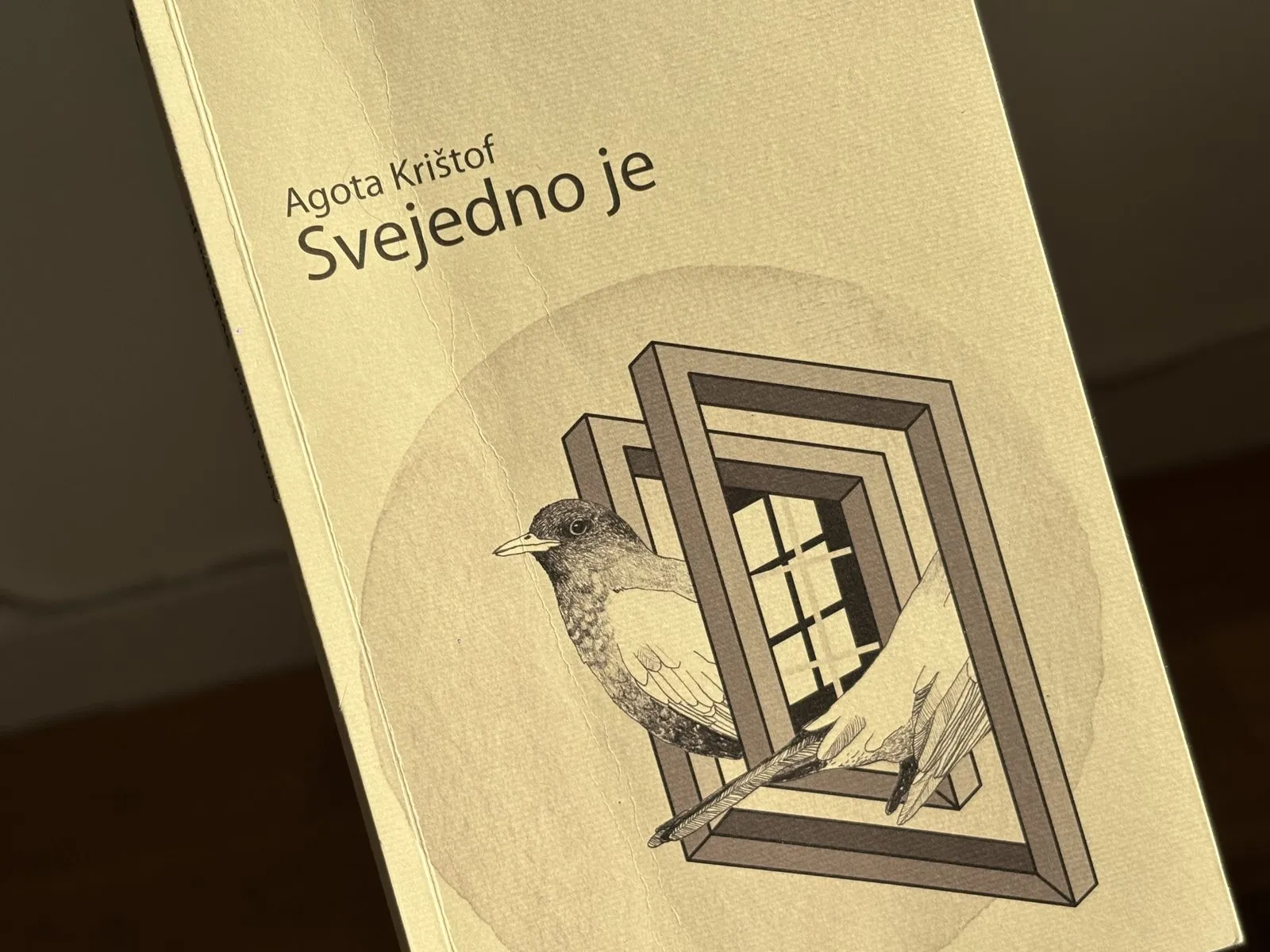
I heard about Kristóf some time ago, and her Notebook Trilogy has been on my wishlist for quite some time. I picked up this collection of her short stories because it felt like the right thing to do — I was mindlessly browsing the Booka store when the cover, featuring a rather M. C. Escher-esque illustration of a bird flying in and out of a window, caught my attention. I ended up finishing it over the next few days, marking every story with a Post-it note in a different colour (pink meaning “I love this one!”). My favourites are: “A Train to the North” (“Voz za sever”), “The Child” (“Dete”), “Wrong Numbers” (“Pogrešni brojevi”), “Revenge” (“Osveta”), and “My Father” (“Moj otac”).
I have to say there were also some stories that began wonderfully, but it felt like Kristóf struggled to finish them with the same impact. Additionally, some stories reminded me conceptually of other works I’ve read. For example, “The Axe” (“Sekira”) reminded me of Roald Dahl’s “Lamb to the Slaughter”, while “The Writer” (“Pisac”) felt almost like a miniature, satirical take on the suffering-writer archetype we encounter in Hamsun’s Hunger.
Nevertheless — I loved this book, would 100% recommend it to anyone interested in short prose, and will 100% reread some (if not all) of Kristóf’s stories!

Curious about technology, product thinking, and anything worth reading.
Continue reading
An illustration of Kharms's four illustrations
Daniil Kharms's short absurdist play about a writer who drops dead from one line of criticism felt oddly specific and relatable. Here it is in the original Serbian and in Wikilivres' English translation. *And that's all.*
Three articles about AI you should read
Three recent reads on AI from three different angles: an engineer's case for keeping craft and authorship, Erin Brockovich mapping data center concerns, and a visual look at how AI decision models handle the trolley problem.
RACI charts are actually missing a letter
A RACI chart settles who does the work and who owns the outcome. What it doesn't settle is who makes sure anyone actually uses it. The missing letter is E, for Enforcer.